
Drydock repair / Vietnam
Keel steel renewal in Vietnam After grounding damage
Published
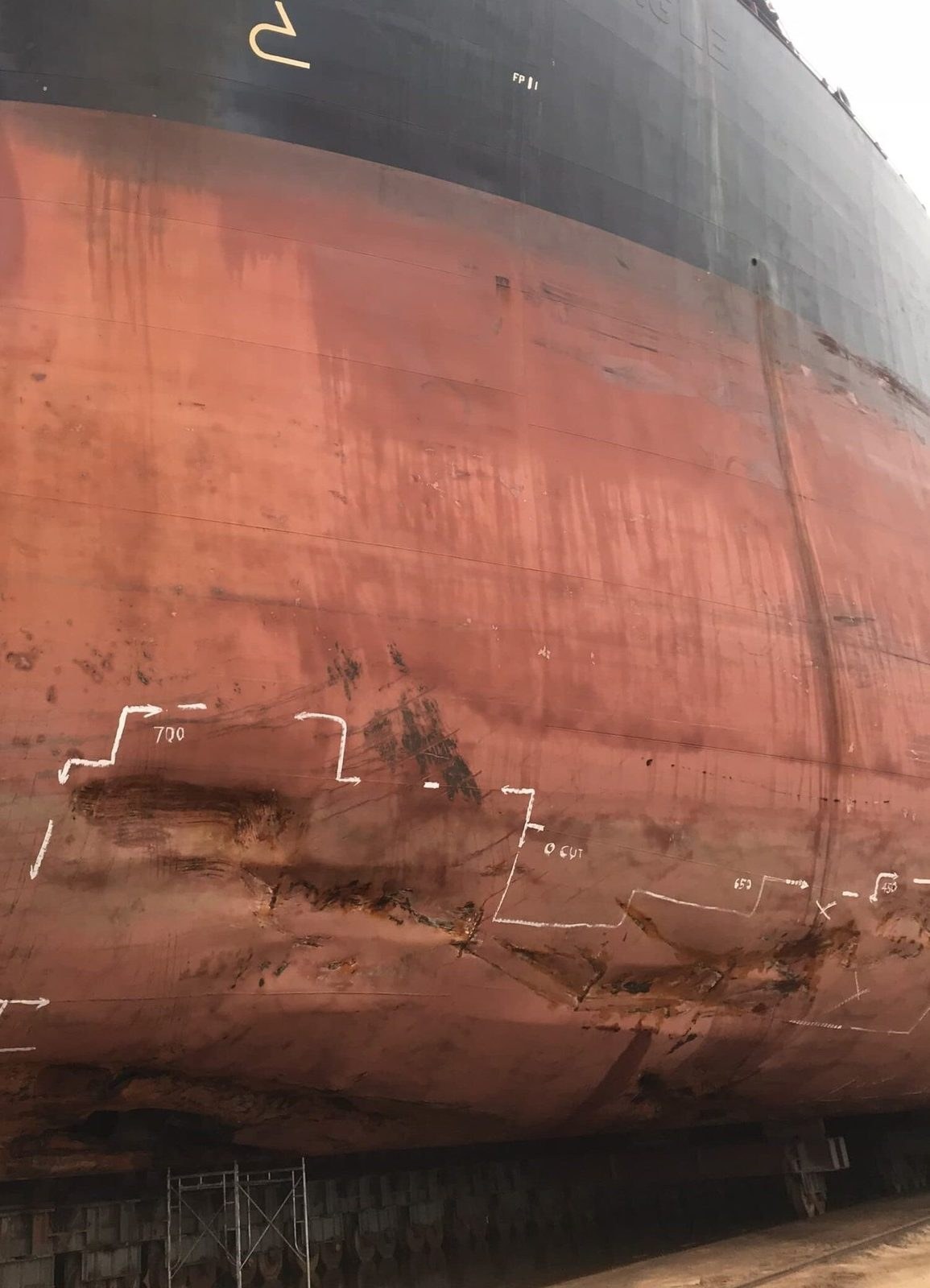
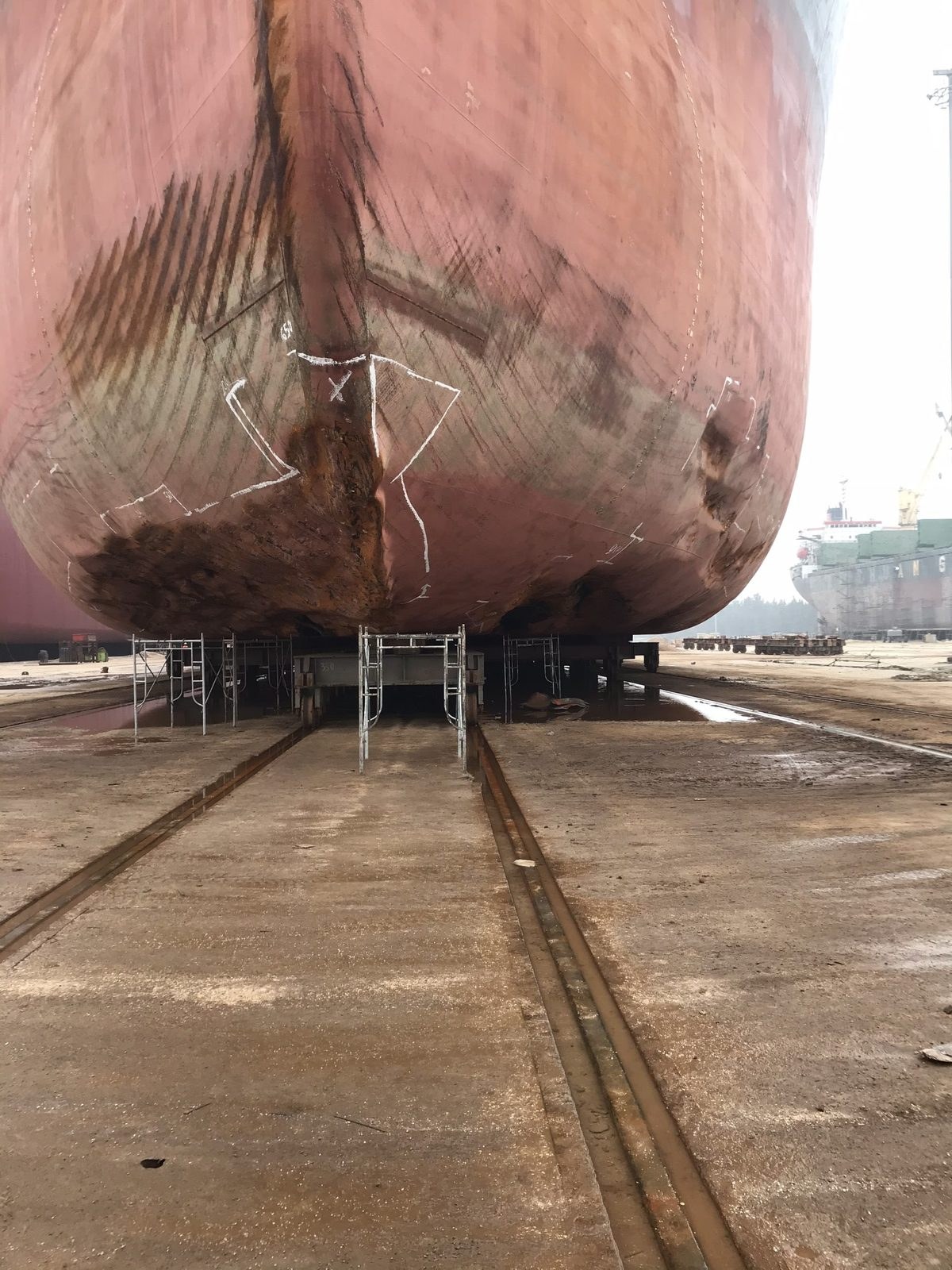
Grounding damaged the keel and bottom shell, with water entering internal tanks. This Vietnam drydock work record shows the damaged area and the steel-renewal approach for the affected structure.

- Damaged area length
- Approx. 12 m
- Hull openings
- Around 1 m wide
- Repair approach
- Drydock steel renewal
01
The damage
The damaged bottom area was approximately 12 metres long, with holes around 1 metre wide. Water ingress into internal tanks meant that both the external plating and the affected internal structure needed attention.
02
The repair approach
Underwater welding was not suitable for this damage. The vessel was transferred to a shipyard for drydock access, cropping of damaged plating, steel renewal, welding and inspection.
Project photographs
The damaged keel in drydock
These photographs show the damage before steel renewal. Open a photo to see the full-size view.
Repair considerations
Scope, inspection
and repair control
The scope for each vessel depends on the damage, tank condition, inspection findings and class requirements.
Keel Steel Renewal After Grounding Damage
Grounding damage can affect the keel plate, bottom shell plating, internal tank structure, frames, brackets, stiffeners and watertight integrity of the vessel. When the bottom shell is holed or heavily deformed, temporary underwater repair may not be sufficient or technically acceptable.
SVC Marine performs work for shipowners, ship managers and superintendents with practical drydock repair execution in Vietnam. Our repair team and welders can carry out steel cutting, renewal preparation, fitting, welding, grinding and repair completion records, with surveyor or class attendance where required.
Why Underwater Welding Was Not Suitable
Underwater welding or temporary underwater sealing may be considered only for selected minor or emergency cases, depending on damage type, location, safety condition and technical approval.
In this project, the damage was large and located at the bottom structure, with water ingress into internal tanks. The damaged area required controlled drydock access, proper cropping, steel renewal, welding, inspection and watertight confirmation. For this reason, drydock repair was the correct repair approach.
Typical Repair Scope for Bottom Grounding Damage
The actual scope depends on damage extent, class requirement, tank condition, UTM result and superintendent’s repair list. A grounding damage repair in drydock may include:
- Initial inspection of damaged bottom shell and keel area
- Tank inspection for forepeak tank, water ballast tank or affected internal spaces
- Marking damaged and wasted steel sections for crop and renewal
- Removal of damaged keel plate or bottom shell plate
- Cleaning and edge preparation before fitting new steel
- Fabrication and fitting of new steel insert plates
- Welding by marine repair welders
- Grinding and finishing after welding
- NDT such as dye penetration test, magnetic particle test or ultrasonic test if required
- Watertight testing, hose test or tank test depending on repair area and class requirement
- Primer, coating and final repair records after completion
Repair of Forepeak Tank and Water Ballast Tank Area
When grounding damage causes water ingress into the forepeak tank or water ballast tank, the repair team must check both external bottom damage and internal tank condition. Internal members may be bent, cracked, detached or locally deformed after impact.
The repair scope may require access into ballast tanks, cleaning, ventilation, lighting, staging, gas-free checking, steel renewal, internal structure repair, coating repair and inspection before closing the job.
Steel Repair Team and Welding Work
SVC Marine provides drydock steel repair with marine welders, repair workers, technical attendants and surveyor inspection. For keel steel and bottom shell renewal, repair quality depends on correct crop marking, steel thickness selection, edge preparation, fit-up, welding sequence, NDT readiness and class inspection records.
Our drydock steel repair work may cover:
- Keel plate renewal
- Bottom shell plate renewal
- Side shell plate repair
- Tank top steel renewal
- Frame, bracket and stiffener repair
- Ballast tank steel repair
- Local insert plate repair
- Hull crack repair
- Grounding damage repair
- Steel fabrication and onboard fitting
Drydock Repair Control
Grounding damage repair should be controlled carefully because the final scope is often larger than the first visual estimate. Once the vessel is drydocked and tanks are opened, additional deformation, cracks, wasted steel or internal damage may be found.
SVC Marine can undertake the owner’s side during drydock repair with:
- Damage inspection after drydocking
- Repair scope review with master, chief engineer and superintendent
- Steel quantity and renewal area checking
- Daily repair progress checks
- Photo records before, during and after repair
- Welding and NDT checks
- Class, flag, surveyor or owner’s representative attendance
- Final repair report and completion record
Safety Requirements for Bottom Steel Repair
Keel steel renewal and bottom shell repair involve cutting, grinding, welding, lifting, confined space entry, hot work and tank-related hazards. Before work starts, the vessel and repair team must check access, ventilation, lighting, fire watch, gas-free status where required, safe isolation and hot work permission.
For repairs near ballast tanks, forepeak tank, fuel tanks, cofferdams or void spaces, the internal condition must be checked before cutting or welding. Proper safety clearance is essential before any hot work begins.
When Should Owners Request Drydock Grounding Damage Repair?
Shipowners and managers should consider urgent drydock repair when the vessel has bottom contact damage, hull penetration, tank water ingress, suspected deformation, class comment, ballast tank leakage, abnormal bilge or ballast condition, or visible hull damage after grounding.
Early inspection helps the owner decide whether the vessel can continue safely, needs temporary measures, requires towage, or must enter drydock for steel renewal and class-approved repair.
Service Coverage in Vietnam
SVC Marine provides steel repair, hull repair, keel plate renewal, welding work and drydock repair execution at selected Vietnamese ports, shipyards and anchorages.
Service coverage may include Hai Phong, Hon Gai, Cam Pha, Cai Lan, Nghi Son, Cua Lo, Vung Ang, Son Duong, Hon La, Chan May, Da Nang, Dung Quat, Quy Nhon, Nha Trang, Vung Tau, Phu My, Cai Mep, Ho Chi Minh City area, Long An, Vinh Tan and other selected locations in Vietnam.
Frequently Asked Questions
Does SVC Marine provide keel steel renewal after grounding damage?
Yes. SVC Marine provides keel steel renewal, bottom shell repair, hull plate replacement, welding, NDT attendance and drydock repair attendance for vessels in Vietnam.
Can grounding damage be repaired by underwater welding?
Only selected minor or emergency cases may be considered for underwater repair. If the bottom shell is holed, deformed or causing tank water ingress, drydock steel renewal is usually the proper repair approach.
What tanks may be affected after bottom grounding damage?
Depending on the impact location, grounding damage may affect the forepeak tank, water ballast tanks, double bottom tanks, void spaces or other internal compartments near the bottom shell structure.
Is NDT required after keel steel welding?
NDT may be required depending on class instruction, repair location, weld type, owner’s requirement and surveyor decision. Common methods may include dye penetration test, magnetic particle test or ultrasonic test.
What information is needed for a grounding damage repair enquiry?
The owner or manager should provide vessel name, current location, damage photos, tank condition, water ingress status, class comments, drydock plan and required repair window.
Discuss your vessel’s repair scope
Send the damage photographs, vessel particulars, location and intended repair window to our repair team.