SVC Marine — Buyer Acquisition Desk
Vessel Sourcing Service for Commercial Ship Buyers
SVC Marine searches and screens second-hand commercial vessels against the buyer’s intended trade, cargo, port limits, class requirement, budget, delivery plan and post-purchase risk.
We reduce a broad market into a technically and commercially realistic shortlist before the buyer commits to inspection travel, survey expense, negotiation or deposit.
S&P Desk: shipbroker@svcmarine.com · +84 988 701 231
- Buyer Requirement Review
- Direct Owner & Market Search
- Candidate Screening
- Class & Survey Review
- Inspection Priority
- Delivery & Repair Planning
Illustrative — not a live vessel offer
Buyer Brief
- Vessel type Defined
- Size / capacity Defined
- Route and cargo Defined
- Port draft Limited
- Age / class Limited
- Budget Fixed
- Delivery window Fixed
- Repair tolerance Limited
- Candidate ASeller idea above buyer budgetOutside budget
- Candidate BLoaded draft exceeds discharge port limitDraft unsuitable
- Candidate CSpecial Survey and drydock due within monthsSurvey exposure high
- Candidate DTrade fit, class position and delivery acceptableShortlisted
- Candidate EDelivery area and redelivery timing impracticalDelivery position impractical
- Buyer brief
- Market search
- Screening
- Shortlist
- Inspection
- Commercial path
What Is a Vessel Sourcing Service?
A vessel sourcing service converts a buyer’s operational and commercial requirement into a market search for suitable second-hand ships. It includes requirement definition, owner and broker approach, candidate screening, class and survey review, price and delivery checking, shortlist preparation and inspection planning.
SVC Marine reviews whether a vessel can realistically perform the buyer’s intended trade before recommending further expenditure. Vessel size and asking price alone are not sufficient; cargo suitability, draft, machinery, class position, survey exposure, regulatory requirements, delivery location and post-purchase repair cost must also be considered.
SVC Marine acts on the buyer side during the sourcing mandate. Final purchase authority, legal approval, financing, class, flag, insurance and compliance decisions remain with the buyer and the respective responsible parties.
The Target Is Not a Ship — It Is a Workable Shipping Asset
A market candidate becomes relevant only when it can support the buyer’s cargo, route, port access, operating model and financial limits.
Trade and Cargo
- Cargo type
- Cargo quantity
- Stowage requirement
- Gear requirement
- Tank or hold arrangement
- Reefer requirement
- Charterer requirement
Vessel Particulars
- DWT
- TEU
- CBM
- GT
- LOA and beam
- Draft
- Bollard pull or deck capacity where relevant
Technical Profile
- Build year and yard
- Class
- Main engine
- Auxiliary machinery
- Cargo gear
- Fuel type
- Machinery condition
- Spare-parts availability
Port and Route Fit
- Maximum draft
- Berth length
- Crane availability
- Air-draft restriction
- Canal or trading restriction
- Route distance
- Weather exposure
- Regional service capability
Commercial Limits
- Acquisition budget
- Intended financing
- Operating-cost tolerance
- Delivery cost
- Immediate repair budget
- Target employment
- Resale considerations
Delivery and Readiness
- Delivery area
- Delivery date
- Crew plan
- Class and flag continuation
- Drydock requirement
- Stores and bunkers
- First-cargo readiness
A low purchase price does not make a vessel suitable when the buyer must immediately absorb major survey, repair, delivery or regulatory exposure.
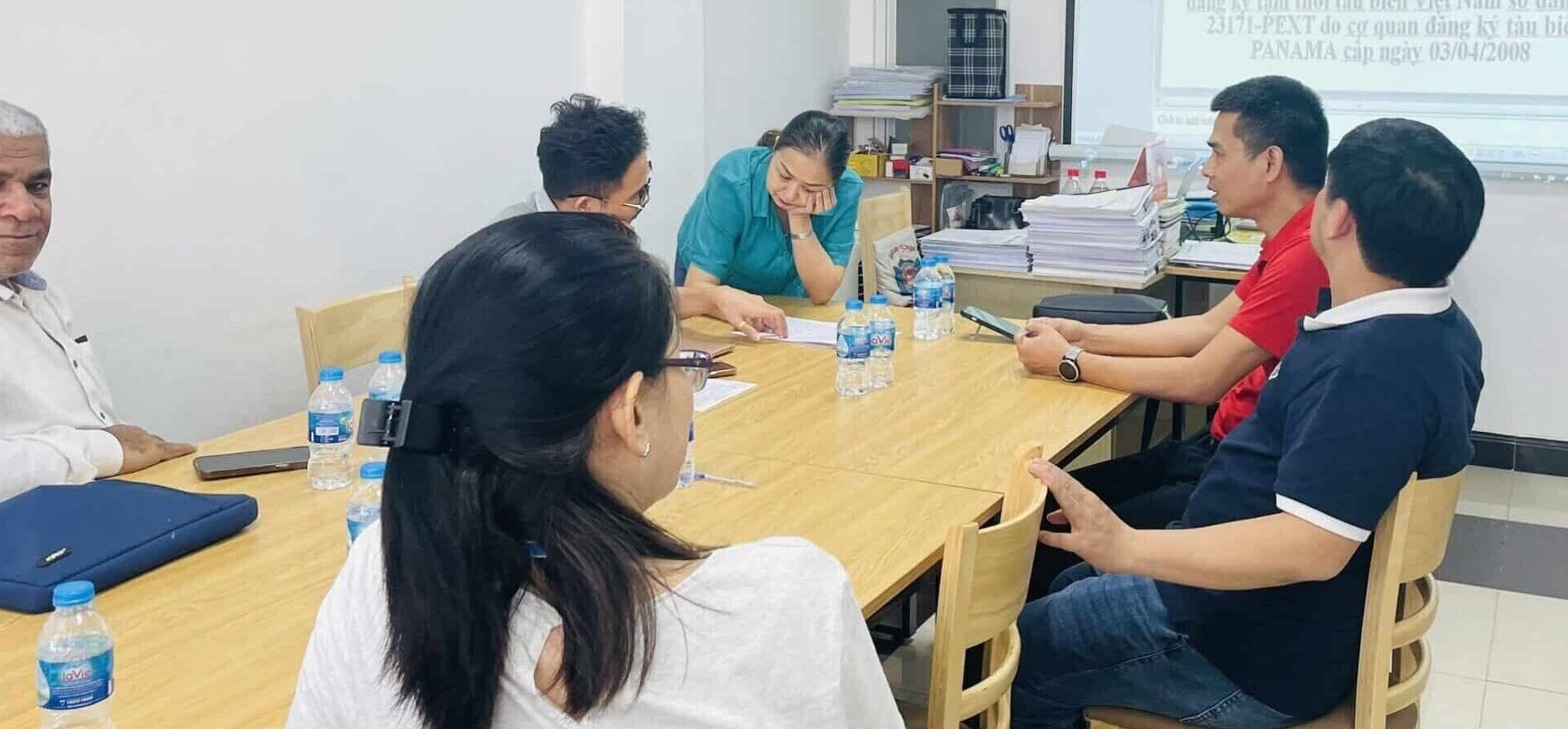
Buyer-side market search, candidate screening and acquisition readiness review — SVC Marine.
What SVC Marine Needs Before Searching the Market
Vessel sourcing requires a credible and sufficiently defined buyer brief. A defined budget and decision timeline allow SVC Marine to approach owners and brokers credibly. Searches without a vessel specification, buyer identity or realistic budget normally produce weak results and unreliable price discussions.
Required Starting Information
- Buyer or company name
- Company profile
- Buyer’s role or mandate
- Target vessel type
- Size or capacity
- Maximum age
- Required class
- Intended cargo and route
- Port or draft restriction
- Budget range
- Preferred delivery area
- Target delivery window
- Inspection readiness
- Compliance restrictions
- Contact details of the decision-maker
Mandate Stages
- Buyer identity and requirement — company, mandate and specification confirmed.
- Initial market search — no LOI required at this stage.
- Candidate and seller-price review — availability and indicative ideas checked.
- Written interest or LOI where requested — only if the seller requires it.
- Inspection approval — access arranged with the seller or manager.
- Offer and firm negotiation — commercial terms and MOA route.
How Buyers Receive the Seller’s Price Idea
Commercial vessel pricing is generally handled privately. Once the buyer’s identity, requirement, budget and transaction readiness are understood, SVC Marine can check current availability and request the seller’s indicative price idea. This reflects established commercial ship sale and purchase practice and SVC Marine’s buyer-qualification process, not a legal requirement.
Initial Enquiry
The buyer submits company details and the acquisition requirement.
Qualification
SVC Marine confirms that the vessel type, budget and delivery timing are realistic.
Indicative Seller Idea
Where the vessel remains available and the seller permits disclosure, an indicative price idea may be provided.
Written Interest
The seller may request an expression of interest or Letter of Intent before releasing further information or approving inspection.
Inspection
The buyer reviews the vessel’s physical and documentary condition.
Firm Negotiation
Commercial terms are negotiated based on the buyer’s offer, inspection findings and seller instructions.
Availability and pricing remain subject to seller confirmation, inspection, contract and withdrawal without notice.
How SVC Marine Searches the Vessel Market
Publicly Offered Vessels
- SVC Marine vessel archive
- Published broker circulars
- Market listings
- Known sale candidates
Direct Owner Approach
- Owners with matching tonnage
- Managers controlling candidate vessels
- Operators considering fleet renewal
- Private availability checks
Direct approach is used where a credible buyer requirement exists and an appropriate owner contact can be identified.
Broker and Market Network
- International S&P brokers
- Regional brokers
- Technical managers
- Commercial operators
- Private market contacts
Off-Market Possibilities
An off-market vessel is not automatically available for sale. SVC Marine may ask whether an owner will consider a discussion, but availability, price and authority must be confirmed directly. No exclusive access to off-market tonnage is claimed.
Why Most Market Candidates Do Not Reach the Shortlist
Screening is a controlled reduction of market risk. Each gate removes candidates that cannot justify the buyer’s next cost commitment.
Specification and Availability
- Vessel type
- Capacity
- Age
- Build
- Gear
- Class
- Delivery location
Can the Vessel Serve the Trade
- Cargo
- Draft
- Port limitations
- Route
- Crane or reefer requirement
- Charterer requirement
Condition and Survey Liability
- Survey status
- Drydock due date
- Machinery profile
- Class recommendations
- Known damage
- Steel and repair exposure
- Regulatory equipment
Price, CAPEX and Timing
- Seller idea
- Buyer budget
- Delivery cost
- Immediate CAPEX
- Timing
- Negotiation position
Seller, Ownership and Compliance
- Seller identity
- Ownership and management
- Flag and class history
- Sanctions exposure
- Payment route
- Inspection permission
Where the Buyer Should Spend Next
- Priority 1 — inspect
- Priority 2 — retain as alternative
- Priority 3 — reject
- More information required
The purpose of screening is not to produce the largest vessel list. It is to prevent the buyer from spending money on the wrong ship.
Commercial Vessel Types SVC Marine Can Source
Each segment is searched against a different set of technical variables. The variables below define what actually decides suitability within that segment.
Container Vessels
Search variables
- TEU
- Homogeneous intake
- Gear
- Reefer sockets
- Hatch arrangement
- Draft
- Feeder route
- Crane capacity
General Cargo & MPP
Search variables
- DWT
- Box-shaped holds
- Gear and tandem lifting
- Tweendecks
- Hatch dimensions
- Project-cargo capability
- Deck strength
Bulk Carriers
Search variables
- DWT segment
- Gear
- Grain capacity
- Hatch covers
- Hold condition
- RightShip or charterer requirement
- Survey position
Tankers
Search variables
- Cargo class
- Coating
- Heating
- Pumps
- Segregation
- Double hull
- Vetting history
- Age and trading restrictions
Tugs, Barges & Workboats
Search variables
- Bollard pull
- Propulsion
- Class
- Deck area
- Ramp
- Crane
- Accommodation
- Towage or offshore duty
Other Commercial Tonnage
Segments
- RoRo
- Landing craft
- Ferries
- Offshore-support vessels
- Utility vessels
- Specialized cargo vessels
Sourcing feasibility depends on current market availability and the buyer’s technical, commercial and compliance requirements.
What a Buyer Shortlist Should Show
The example below is an illustrative shortlist format only. It contains no real vessel, price or availability. Candidate references are neutral placeholders.
| Requirement | Candidate A | Candidate B | Candidate C |
|---|---|---|---|
| Vessel type | Match | Match | Partial match |
| Year built | Within buyer’s age limit | Above buyer’s age limit | Within buyer’s age limit |
| Yard / build country | Confirmed | Confirmed | Unknown |
| Class | IACS member | IACS member | Risk Class continuation to be checked |
| Capacity | Match | Partial match | Match |
| Draft | Within port limit | Risk Exceeds discharge port limit | Within port limit |
| Main engine | Parts readily available | Parts readily available | Partial match Obsolete model |
| Cargo gear | As required | Gearless | As required |
| Survey position | Recently completed | Due within 12 months | Risk Overdue items reported |
| Delivery area | Acceptable | Distant, high delivery cost | Acceptable |
| Seller idea | Within budget | Above budget | Unknown Not yet released |
| Immediate repair exposure | Low | Moderate | High |
| Trade suitability | Match | Risk | Partial match |
| Main concern | Inspection access timing | Draft and delivery cost | Class and survey exposure |
| Recommended next step | Inspection priority Priority 1 | Reject unless price and delivery change | Request documents before any inspection |
The actual shortlist may be delivered as a confidential comparison sheet, email report or buyer presentation depending on the mandate.
What SVC Marine Reviews Before Recommending Inspection
Vessel and Machinery
- Hull and machinery profile
- Main engine and auxiliary engines
- Cargo systems
- Gear, cranes and hatch covers
- Known defects
- Parts availability
- Build quality and service history
Class and Survey Exposure
- Classification society
- Class status
- Special Survey
- Intermediate Survey
- Drydock position
- Recommendations or conditions
- Statutory certificate status
- Required class continuation
Trade and Regulatory Fit
- Port and route restrictions
- Ballast-water compliance
- Emissions requirements
- PSC exposure
- Tanker vetting or RightShip sensitivity
- Flag continuation
- Trading-area limits
Acquisition Economics
- Seller price idea
- Delivery cost
- Inspection cost
- Immediate drydock
- Steel and machinery repair
- Class renewal
- Crew and stores
- Post-delivery readiness
- Operating-cost exposure
Preliminary screening is based on information available before inspection. It does not replace an onboard pre-purchase inspection, class confirmation or legal due diligence.
When the Vessel Must Be Designed Around the Trade
For a new shipping project, vessel sourcing should begin with the cargo and route — not with a ship already offered for sale.
Route Feasibility Inputs
- Origin and destination
- Cargo type
- Parcel size
- Frequency
- Port draft
- Berth and crane condition
- Loading and discharge method
- Reefer demand
- Voyage distance
- Speed requirement
- Bunker availability
- Crew and management plan
- Charterer or consignee requirement
- Seasonal weather
- Repair and spare-parts access
Sourcing Output
- Recommended vessel segment
- Minimum technical specification
- Non-negotiable restrictions
- Acceptable alternatives
- Search budget
- Inspection priorities
A full commercial feasibility study is a separate scope and is not included unless specifically agreed.
When a Candidate Is Ready for Inspection
Conditions Before Inspection
- Current availability is confirmed
- Seller authority is reasonably established
- Price expectation is within a workable range
- Basic documents have been reviewed
- Delivery position is acceptable
- The buyer remains ready to proceed
- Major trade restrictions have been checked
- Inspection permission is available
Inspection Scope
- Physical condition
- Machinery
- Cargo areas
- Certificates
- Class status
- Maintenance records
- Drydock and survey exposure
- Defect photographs
- Repair-cost comments
Where Vessel Sourcing Ends and S&P Execution Begins
Vessel sourcing identifies and qualifies the candidate. Once the buyer chooses to proceed, the mandate may continue into offer submission, negotiation, MOA follow-up, delivery planning and post-purchase technical readiness.
- Candidate selected
- Inspection completed
- Buyer offer
- Seller counter
- Commercial agreement
- MOA and deposit
- Delivery preparation
- Handover
- Drydock or repair
- Operating readiness
Continue to Ship Sale & Purchase Execution or Turnkey Maritime Execution.
Risks That Must Be Identified Before Purchase
Vessel Condition Risk
- Hidden defects
- Steel wastage
- Machinery condition
- Cargo-system limitations
- Incomplete maintenance records
Survey and Class Risk
- Upcoming Special Survey
- Drydock exposure
- Class conditions
- Statutory deficiencies
- Class-transfer limitations
Commercial Risk
- Unrealistic seller idea
- Unclear commission chain
- Delivery-cost exposure
- Vessel withdrawal
- Financing timing
Counterparty Risk
- Seller authority
- Beneficial ownership
- Mortgage and encumbrance
- Document authenticity
- Payment instructions
Regulatory Risk
- Sanctions
- Flag restrictions
- Emissions
- Ballast water
- PSC
- Charterer vetting
Readiness Risk
- Crew
- Bunkers
- Stores
- Insurance
- Class continuation
- Initial repair
- First cargo
A vessel may be technically afloat and commercially offered yet still be unsuitable for the buyer’s intended operation.
Commercial Screening Does Not Replace Formal Due Diligence
SVC Marine performs practical sourcing, counterparty review and transaction-side screening based on available market and vessel information. The buyer should appoint appropriate legal, banking, insurance, class, flag and compliance advisers before signing an MOA, paying a deposit or taking delivery.
SVC Marine does not provide formal legal, sanctions or financial certification.
Typical Review Areas
- Registered owner
- Beneficial ownership
- Seller authority
- Manager and operator
- Sanctions and restricted parties
- AIS and trading history
- Mortgage and encumbrance
- Deletion documents
- Payment route
- Banking compliance
- MOA terms
- Deposit security
- Delivery documents
From Vessel Transaction to Practical Readiness
ZBM — Transaction Through Drydock Execution
SVC Marine was involved in the ZBM vessel transaction and remained involved through post-purchase drydock execution, owner-side attendance, repair follow-up and vessel-side report sign-off.
Additional Transaction Evidence
Review selected ship sale, purchase, delivery, repair and technical execution records handled by SVC Marine.
Case Studies
Field execution records covering repair scope control, technical attendance and supply delivery at Vietnamese ports and shipyards.
Why Buyers Use SVC Marine for Vessel Sourcing
Requirement Before Inventory
The search begins with the buyer’s intended trade, not with whichever ship is easiest to circulate.
Market and Technical View
Candidate availability is reviewed together with class, survey, machinery, cargo, route and repair exposure.
Shortlist Instead of Circular Volume
The objective is to reduce irrelevant tonnage and identify the vessels that justify further expenditure.
Inspection and Delivery Continuity
The same mandate can continue into inspection, negotiation, delivery attendance, drydock and post-purchase repair.
Field Execution Capability
When a purchased vessel requires work in Vietnam, SVC Marine can remain involved at the vessel, shipyard and repair stage.
Send a Searchable Vessel Requirement
The five groups below form a searchable buyer brief. Use the button to open a pre-structured email containing the same fields.
Buyer
- Company name
- Website
- Country
- Contact person
- Buyer role
- Direct buyer or authorized mandate
- Decision timeline
Vessel
- Type
- DWT / TEU / CBM / GT
- LOA
- Beam
- Draft
- Build year
- Build country
- Class
- Main engine
- Gear
- Cargo systems
- Required equipment
Trade
- Cargo
- Route
- Ports
- Draft restriction
- Required frequency
- Charterer requirement
- Trading area
Commercial
- Budget range
- Financing status
- Preferred delivery area
- Delivery deadline
- Inspection readiness
- Immediate repair budget
- Accepted price flexibility
Restrictions
- Sanctioned-country restrictions
- Flag restrictions
- Class restrictions
- Build-country restrictions
- Trading-history restrictions
- Maximum survey exposure
- Minimum certificate validity
Where This Page Sits in the SVC Marine Service Chain
Find a Vessel
- Commercial Vessels for Sale
- Vessel Sourcing Service — current page
Evaluate the Vessel
Acquire and Prepare the Vessel
Frequently Asked Questions
What is the difference between vessel sourcing and a vessels-for-sale listing?
A vessel listing shows a ship currently circulated for sale. Vessel sourcing begins with the buyer’s requirement and searches both listed and potential market candidates before screening them for technical, operational and commercial suitability.
Can SVC Marine find an off-market vessel?
SVC Marine may approach suitable owners, managers or market contacts where a credible buyer requirement exists. An off-market vessel is not automatically for sale, and availability, seller authority and price must be confirmed.
What information is required before SVC Marine starts a search?
The buyer should provide its identity, vessel type, capacity, age, class, cargo, route, port restrictions, budget, delivery timing and decision timeline.
Can SVC Marine provide the vessel price?
Where the buyer is identified and the vessel remains available, SVC Marine may request and provide the seller’s indicative price idea subject to the seller’s permission and confirmation.
Is an LOI required before receiving a price?
Not necessarily for every initial enquiry. However, the seller may request a written expression of interest or Letter of Intent before releasing detailed information, approving inspection or entering firm negotiations.
Does SVC Marine inspect the shortlisted vessel?
SVC Marine can plan or attend a pre-purchase inspection directly or through an appointed technical inspector, depending on location and agreed scope.
Can SVC Marine assess the likely drydock or repair exposure?
SVC Marine can provide preliminary comments from available documents and later review the exposure in more detail through inspection, class information and repair planning. This does not replace an approved shipyard quotation or class decision.
Can SVC Marine follow the negotiation and MOA?
Yes. A sourcing mandate may continue into offer, counter-offer, negotiation, MOA follow-up and delivery planning. Final legal drafting and approval should remain with the buyer’s legal advisers.
Does SVC Marine guarantee that a vessel will pass inspection?
No. A shortlist is based on available pre-inspection information. Final suitability depends on physical inspection, document review, class confirmation, compliance checks and the buyer’s own decision.
Can SVC Marine source a vessel for a new route?
Yes. The search can begin from the cargo, route, draft, port facilities, voyage pattern and operating plan to define the appropriate vessel segment.
Can SVC Marine arrange post-purchase drydock in Vietnam?
Yes. Where suitable, SVC Marine can continue into owner-side drydock attendance, repair-scope control, class follow-up and delivery close-out in Vietnam.
How long does vessel sourcing take?
There is no fixed period. Timing depends on how specific the requirement is, current market supply, seller expectations, budget, inspection access and the buyer’s readiness to proceed.
Vessel Availability and Acquisition Decisions
Vessel availability, price ideas, inspection access, seller authority, delivery position, class status and commercial terms remain subject to confirmation by the seller and relevant parties.
Preliminary candidate comments do not replace onboard inspection, class confirmation, legal due diligence, banking approval, sanctions screening, insurance review or technical acceptance.
The buyer retains final authority for inspection, offer, contract, deposit, financing, class, flag, insurance and purchase decisions.
Define the Trade · Search the Right Vessel
Send SVC Marine Your Vessel Requirement
Send the target vessel type, capacity, age, class, route, cargo, port limits, budget, delivery area and target timing. SVC Marine will review whether the mandate is searchable and identify the appropriate market approach.
shipbroker@svcmarine.com · info@svcmarine.com · +84 988 701 231