!
Structural Wastage
Corroded bulkhead, deck, bracket, platform or cargo-area steel may require cropped renewal rather than surface treatment.
SVC Marine executes vessel steel renewal, pipe welding, structural repair, fabrication and controlled hot work at Vietnamese ports, shipyards and drydocks. Our scope can cover onboard measurement, material preparation, fit-up, welding, inspection follow-up and completion reporting.
A small area of wasted steel, a leaking overboard pipe or an incomplete class item can hold up cargo operations, repair close-out or vessel departure.
Ship repair desk: shiprepair@svcmarine.com · Phone / WhatsApp: +84 988 701 231
Yes. SVC Marine handles selected vessel steel repair, steel renewal, pipe welding, fabrication and controlled hot work at Vietnamese ports, shipyards and drydocks. The work package may include onboard inspection, measurement, repair-scope review, material preparation, crop and renewal, insert plate fit-up, welding, NDT or testing follow-up and completion reporting.
Hot work feasibility depends on the repair location, vessel condition, port or shipyard rules, cargo and tank condition, safe access, Permit to Work, isolation, gas-free requirements, fire watch, class involvement and available repair time.
SVC Marine does not treat steel repair as a manpower-only job. The work must be controlled from the defect and repair boundary through final inspection and close-out evidence.
Steel damage rarely stops a vessel on its own. What stops the vessel is an unapproved repair method, a missing permit, or an item class will not close.
Corroded bulkhead, deck, bracket, platform or cargo-area steel may require cropped renewal rather than surface treatment.
A wasted or leaking overboard, cooling-water, ballast, bilge, fire-main or deck-service pipe may require measurement, spool fabrication, installation and testing.
A class condition, recommendation, damage survey or thickness-measurement finding may require an approved repair scope and inspection evidence.
Material, manpower, access and approval may need to be prepared before the vessel arrives.
A temporary patch or previous repair may not be suitable as a permanent class or operational solution.
The correct repair method depends on location, structural significance, remaining thickness, system duty, class requirement and vessel schedule.
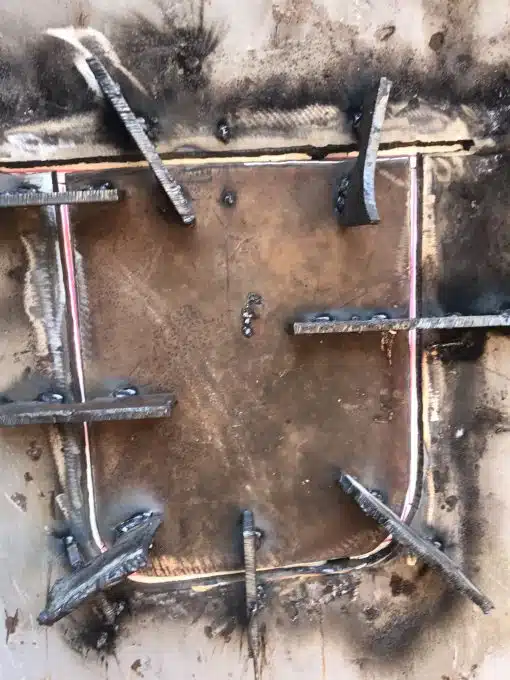
One repair, four controlled stages. The photographs below are from SVC Marine bulkhead renewal work and are shown in the order the job was executed.
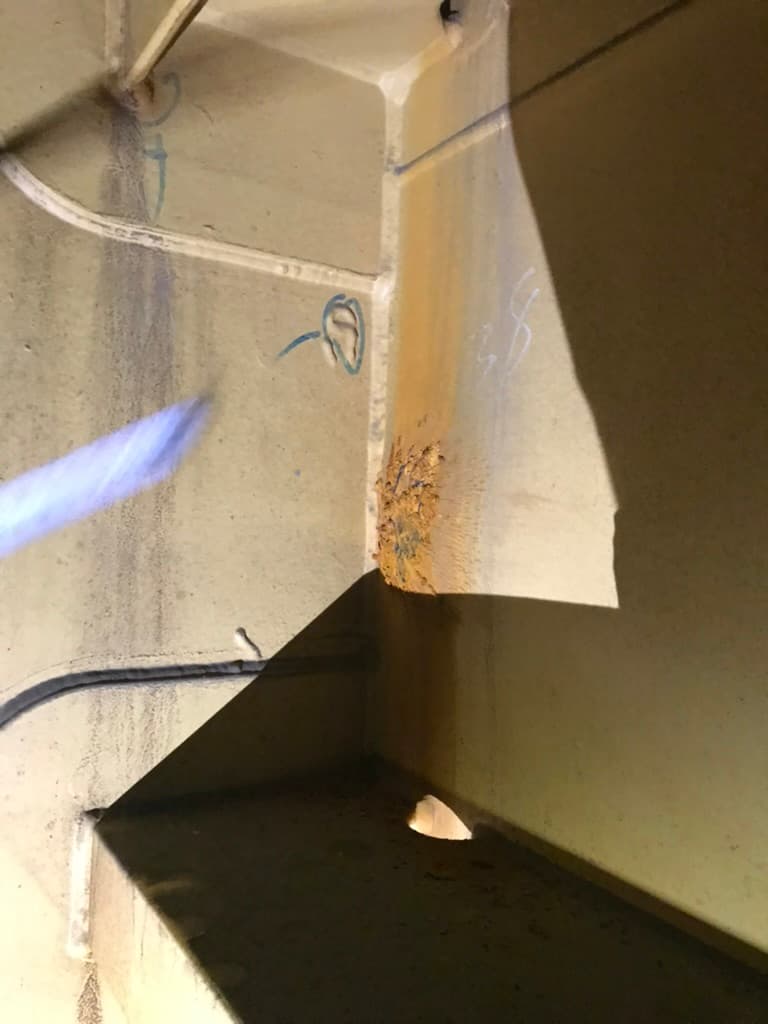
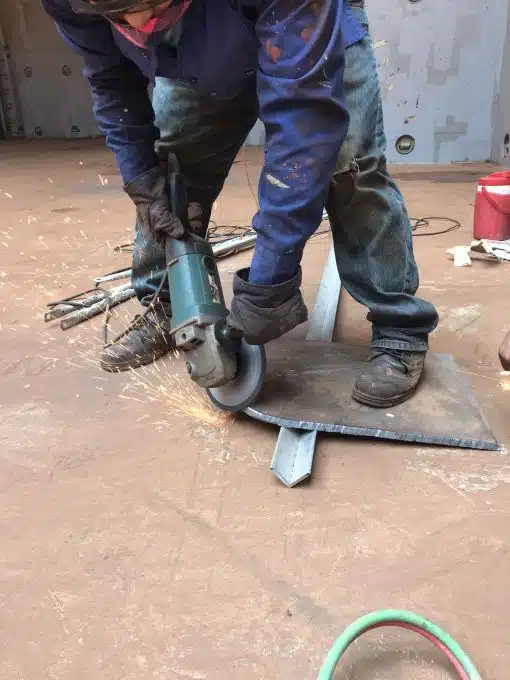
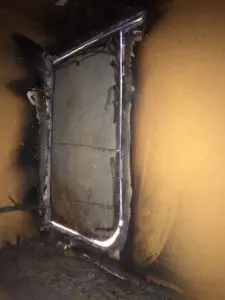
These photographs document practical repair stages. Final technical acceptance depends on the approved scope, material, welding procedure, inspection result and responsible approving party.
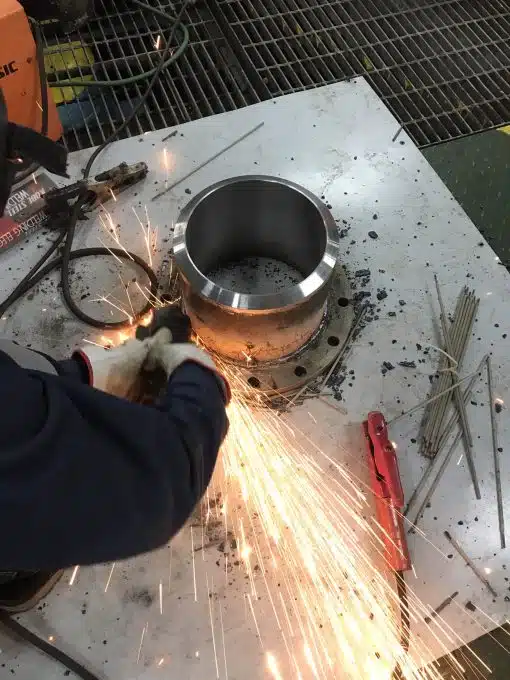
A leaking or corroded vessel pipe frequently requires more than onboard welding. The job may involve system isolation, pipe measurement, material confirmation, flange preparation, workshop fabrication, onboard fitting and a leak, pressure or function test.
Not every pipe can be repaired while the system remains operational. Whether the system must be shut down, drained and isolated is decided against the system duty and the vessel’s own procedure, not against the repair schedule.
Five work packages, grouped by where the steel sits and what controls it attracts.
Underwater, shell, bottom and class-critical work will normally require shipyard or drydock controls. It is not offered as berth or anchorage work.
Where the work is done is a technical decision, not a commercial one. Choosing the wrong location is what turns a two-day repair into a missed sailing.
Not every repair can be completed at berth or anchorage. Where the scope exceeds what the location safely allows, SVC Marine says so and prices the drydock or shipyard route instead.
Eight gates stand between an agreed repair scope and the first arc. A gate that cannot be cleared is reported to the vessel as a limitation, not worked around.
Not every job automatically has an approved WPS or a class-certified welder. Documents are verified case by case.
No welding, cutting or grinding should proceed until the responsible vessel and local parties have approved the work and applicable safety controls are in place.
Required
Confirm
Prepare
May include
Control
May include
Provide
Which of these are actually needed is set by the repair, not by the contractor. A small bracket and a class-recorded bulkhead renewal do not carry the same document load.
Required documentation depends on repair significance, class instruction, owner requirement and the party responsible for final acceptance.
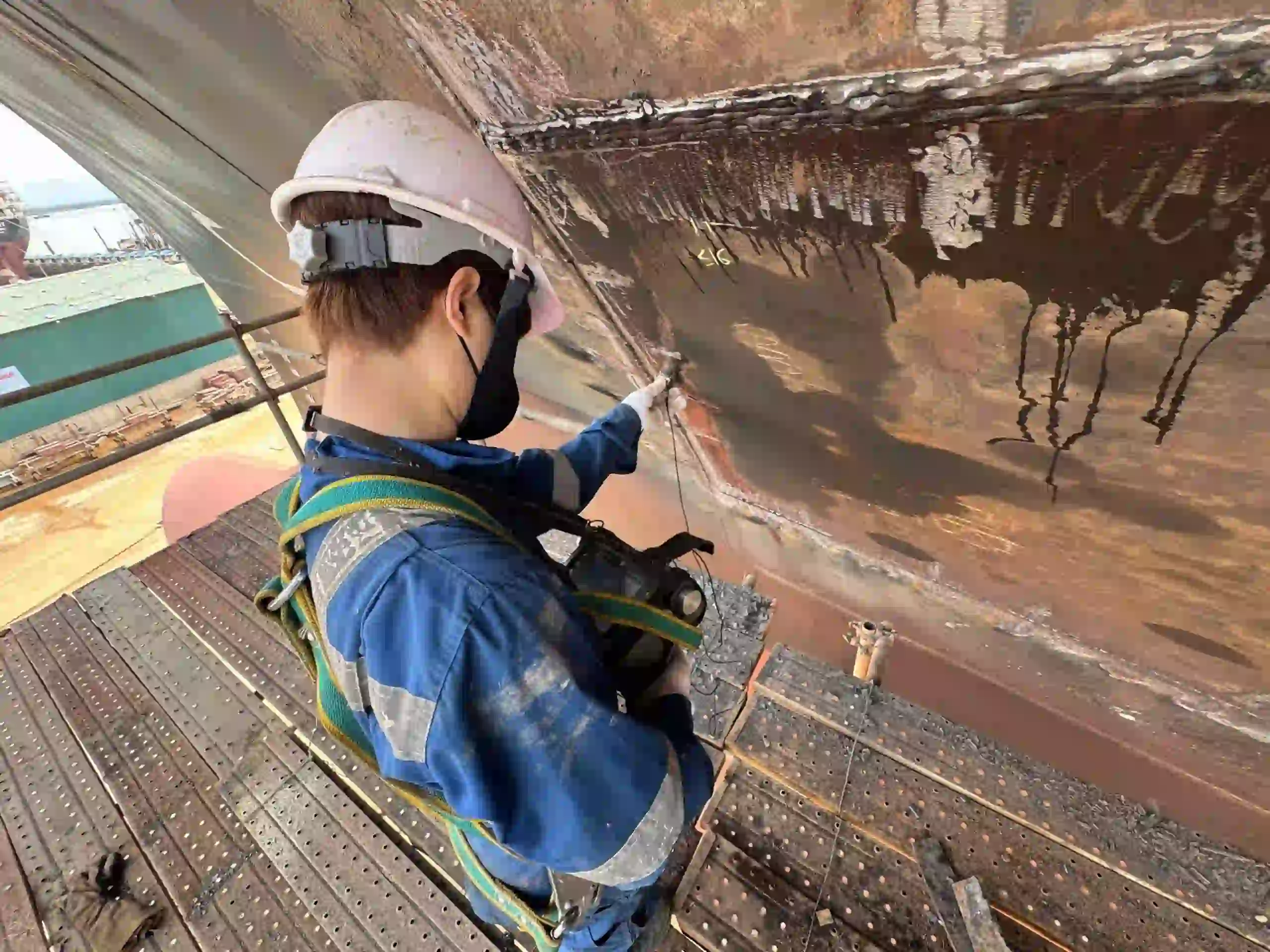
Depending on the repair location and technical requirement, inspection may include visual testing, penetrant testing, magnetic-particle testing, ultrasonic testing or another approved NDT method.
SVC Marine can arrange or follow qualified NDT attendance and collect the resulting records where required. SVC Marine is not the certifying NDT body.
The test method, test pressure and acceptance criteria must be confirmed for the specific system before testing begins.
SVC Marine’s Vietnam operations and workshop presence at Vung Ang allows selected plates, pipe spools, brackets, foundations and repair materials to be prepared before dispatch to a vessel, shipyard or onboard repair team.
Final onboard fit depends on accurate vessel measurement, material confirmation and the actual condition found after damaged steel or piping is opened.
Published SVC Marine records covering steel cropping, keel and bottom-plate renewal, and container-vessel structural work.
Steel cropping, keel or bottom-plate renewal and drydock repair attendance.
Repair record involving damaged keel or bottom steel after grounding-related damage.
Cell-guide steel renewal, alignment and welding work for a container vessel.
The photographs and dimensions decide the quotation. Without them the price is a guess, and a guessed price is renegotiated on site.
SVC Marine connects the defect, material, manpower, permit, welding, inspection and close-out stages into one controlled local repair package.
Selected steel and pipe components can be measured onboard, prepared ashore and returned for fitting.
Owners and managers receive progress photographs, completion status, outstanding issues and repair records.
Where required, SVC Marine follows local class attendance, NDT, test records and document close-out.
After the steel work is closed
Newly renewed or welded steel is bare and starts corroding immediately. The coating system, the achievable surface preparation standard and the application window should be agreed before the steel work is signed off, not after.
Primer, anticorrosive and topcoat systems for renewed steel, in drydock or afloat.
All welding, cutting, heating and grinding remain subject to vessel approval, port or shipyard rules, Permit to Work, risk assessment, isolation, gas-free requirements, fire watch, safe access and applicable class or statutory requirements.
SVC Marine may execute and control the agreed local repair scope but does not replace:
Final repair and statutory acceptance remains with the relevant authorized party.
Send the vessel details, damage photographs, repair dimensions, location, ETA, required completion date and class requirements. SVC Marine will review the repair route, manpower, material, workshop preparation and inspection requirements.