SVC Marine — Owner-Side Technical Control
Marine Technical Superintendent Services in Vietnam
SVC Marine provides owner-side technical superintendent attendance for vessels undergoing drydock, afloat repair, class survey, inspection, delivery and post-purchase technical work in Vietnam.
We attend the vessel or shipyard, control repair work packages, track class and vendor items, monitor cost and delay exposure, verify completion evidence and report technical facts directly to the owner or manager.
A repair item is not closed because a vendor says “finished”. The owner needs evidence that the agreed scope was completed, tested where required, accepted by the responsible parties and no longer threatens class, schedule or vessel readiness.
operation@svcmarine.com · drydock@svcmarine.com · shiprepair@svcmarine.com · +84 988 701 231
- Repair Scope Control
- Vendor Control
- Class Follow-Up
- Cost & Delay Exposure
- Daily Reporting
- Technical Close-Out
Illustrative rows — not a real project
| Item | Status | Vendor | Class | Schedule | Cost | Evidence | Next action |
|---|---|---|---|---|---|---|---|
| Steel renewal | In progress | Yard | Class witness required | Undocking critical | VO pending | Fit-up photos | Complete weld / NDT |
| Main engine service | Waiting part | Maker technician | No | Sailing critical | Delay exposure | Part ETA | Owner decision |
| LSA service | Completed | Approved provider | Statutory | Non-critical | Within quote | Service report | Collect certificate |
- Open
- In progress
- Hold
- Class comment
- Waiting material
- Waiting vendor
- Owner decision
- VO review
- Test required
- Completed
- Verified
- Closed
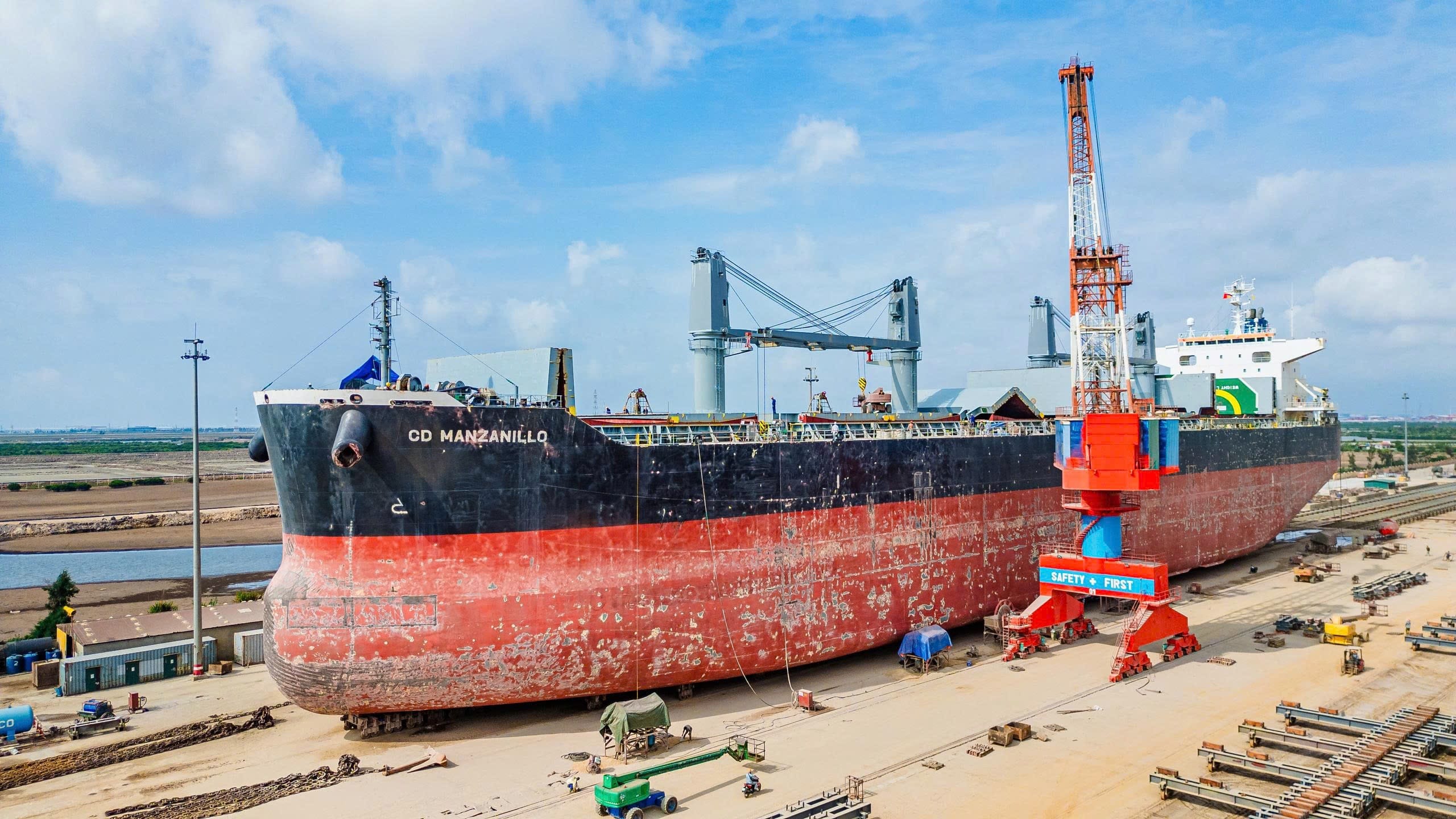
SVC Marine technical superintendent attendance for CD Manzanillo during drydock repair in Vietnam.
What Does a Marine Technical Superintendent Do?
A marine technical superintendent represents the owner’s technical interests by monitoring vessel condition, repair scope, shipyard or contractor work, class items, machinery service, testing, documentation, cost exposure, schedule risk and technical readiness.
During a local attendance assignment, SVC Marine checks actual conditions at the vessel or yard, tracks agreed work packages, reports incomplete or disputed items and highlights decisions requiring owner or manager instruction.
The role does not replace the vessel’s master, ship manager, classification society, flag administration or statutory authority. Final technical and statutory acceptance remains with the responsible parties.
What the Owner Needs Controlled on Site
Eight control functions define the mandate. Progress reporting alone is only one of them.
Scope Control
- What exactly is being repaired?
- What is included and excluded?
- What changed after opening?
- Is the method technically reasonable?
- Is owner approval required?
Work Progress
- Started
- In progress
- Completed
- Waiting
- Blocked
- Rework
- Testing pending
Vendor Control
- Attendance
- Manpower
- Tools
- Materials
- Productivity
- Rework
- Report
- Certificate
Class & Survey Control
- Surveyor comments
- Hold points
- Inspection
- Test
- Recommendation
- Evidence
- Close-out
Schedule Control
- Critical path
- Sailing impact
- Undocking impact
- Material delay
- Vendor delay
- Class delay
Cost Exposure
- Original quotation
- Extra scope
- Variation
- Standby
- Rework
- Owner approval
- Disputed claim
Evidence Control
- Before photos
- During work
- Completion photos
- Measurements
- Test results
- Service reports
- Certificates
Readiness Control
- Safe to sail
- Safe to undock
- Required class items closed
- Essential machinery operational
- Deferred items recorded
- Owner informed
Every Technical Job Should Have a Clear Status
Each significant job is carried as a work package with its own record. The template below is the tracking format used on site.
| Register field | What it records |
|---|---|
| Work package number | Unique reference used in every report and photo set. |
| System / location | Where onboard the job sits — tank, hold, engine room, deck, bridge. |
| Defect | The actual technical fault, described in condition terms rather than as a task. |
| Required scope | Agreed method and extent, including what is deliberately excluded. |
| Responsible party | Yard, vendor, maker technician, crew or owner-supplied. |
| Material | Owner-supplied, yard-supplied, imported, in stock or awaiting delivery. |
| Start date / target completion | Planned window against the docking or port schedule. |
| Status | Open, in progress, hold, waiting material, waiting vendor, test required, completed, verified, closed. |
| Class involvement | Whether a surveyor comment, hold point or witness applies. |
| Test requirement | Pressure test, function test, NDT, trial or alarm test. |
| Cost status | Within quotation, extra scope, VO pending, VO approved or disputed. |
| Evidence | Before, during and completion photographs, measurements, reports, certificates. |
| Open issue | What still prevents close-out. |
| Next action | The specific next step and who owns it. |
For every significant job, the superintendent should be able to answer three questions at any moment:
1. What is actually wrong? 2. What has actually been completed? 3. What still prevents technical close-out?
Owner-Side Technical Control During Drydock
Superintendent-specific responsibilities across the docking period. The yard execution service is covered separately on Drydock Supervision in Vietnam.
-
Before Docking
- Repair specification
- Defect list
- Class survey status
- Yard quotation
- Vendor plan
- Owner-supplied materials
- Critical parts
- Docking schedule
- Priority items
-
Opening Stage
- Hull condition
- Sea valves
- Sea chest
- Tanks
- Steel findings
- Propeller
- Rudder
- Tailshaft-related items
- New discoveries
-
Repair Stage
- Steel
- Coating
- Machinery
- Valves
- Pipe
- Electrical
- Cargo gear
- LSA and FFE
- Vendors
-
Testing Stage
- Pressure tests
- Function tests
- NDT
- Machinery trials
- Alarm tests
- Class witness
- Service-provider records
-
Close-Out
- Open-item list
- Class status
- Test records
- Vendor reports
- Certificates
- Owner acceptance
- Undocking readiness
Technical Superintendent During Short Port Repair
Afloat repair requires more aggressive prioritisation because berth or anchorage time is limited and cargo, pilot, sailing and port schedules may continue while the repair is underway.
Defect
What failed?
Sailing Impact
Can the vessel sail safely and compliantly without rectification?
Access Window
How many working hours are actually available?
Repair Route
Onboard repair, workshop repair, replacement or temporary action?
Materials
Available locally or waiting?
Vendor
Mobilised and equipped?
Test
What proves completion?
Close-Out
Owner, class or vessel acceptance?
Typical Short-Window Items
Execution service: Afloat Ship Repair in Vietnam.
From Class Comment to Technical Close-Out
- Class comment
- Repair scope
- Material / vendor
- Inspection
- Test
- Evidence
- Surveyor review
- Close-out
Items Typically Carried Through This Chain
What SVC Marine Handles
- Track local repair
- Follow surveyor attendance
- Prepare evidence
- Follow vendor reports
- Report pending items to owner
SVC Marine follows the repair and evidence process until the item is ready for review or closure by the responsible class or statutory party. It does not close class items itself and does not approve repairs on behalf of class.
Local Contractor Performance Must Be Verified on Site
Scope
Did the vendor understand the exact job, including method, extent and what is excluded?
Mobilisation
- On time
- Correct manpower
- Tools
- Materials
- Certificates
Execution
- Quality
- Productivity
- Access
- Safety
- Rework
- Technical deviations
Testing
- Test method
- Witness
- Result
- Record
Commercial Exposure
- Waiting
- Standby
- Extra manpower
- Additional material
- VO
- Rework claim
Documentation
- Service report
- Completion report
- Photos
- Certificate
- Test record
- Invoice basis
Vendor attendance is not the same as verified completion. A vendor statement that a job is “completed” is recorded as a vendor status, not as technical verification.
Technical Decisions Become Commercial Exposure
Many owner cost overruns begin with legitimate technical discoveries but become uncontrolled because scope, measurement, quotation basis or approval is unclear. The variation is reviewed in sequence rather than accepted as a lump figure at invoice stage.
Original Scope
What was quoted?
New Finding
What changed after opening or inspection?
Technical Necessity
Is the additional work actually required?
Quantity / Measurement
How much additional work, measured how?
Price Basis
Labour, material, unit rate, lump sum or time basis?
Schedule Impact
Does it affect the critical path?
Owner Decision
Approve, reject, defer or request an alternative?
Evidence
Photographs, measurement, class comment, vendor quotation.
This is a practical owner-side exposure review, not a quantity survey and not a commercial approval.
SVC Marine reviews the technical basis of a variation and reports the exposure. Approval of any variation, extra cost or expenditure remains with the owner or manager.
What Can Delay Sailing or Undocking?
Material Delay
- Plate
- Pipe
- Spare
- Imported component
- Coating
- Consumable
Vendor Delay
- Technician
- Approved provider
- Maker attendance
- NDT
- Specialist
Yard Delay
- Manpower
- Crane
- Scaffolding
- Workshop
- Dock slot
Class Delay
- Surveyor timing
- Test witness
- Additional requirement
- Evidence issue
Vessel-Side Delay
- Isolation
- Tank preparation
- Access
- Crew readiness
- System shutdown
Commercial Delay
- Owner approval
- VO approval
- Supplier payment
- Logistics
Delay Status Applied to Each Item
What the Owner Should Receive Every Day
Executive Status
- Overall progress
- Sailing or undocking target
- Critical issue
- Owner decision required
Work Completed Today
- Work package
- Vendor
- Status
- Evidence
Work In Progress
- Progress percentage
- Constraint
- Target
Delayed Items
- Reason
- Responsible party
- Schedule impact
- Recovery action
Class & Survey
- Surveyor attendance
- Comments
- Open items
- Next witness point
Cost & VO
- New VO
- Pending approval
- Standby
- Potential claim
Tomorrow’s Plan
- Critical activities
- Required owner decisions
- Material or vendor arrival
Photo Appendix
- Before
- Progress
- Completion
- Test
Where the owner or manager requires its own reporting template, the structure above is adapted to that format rather than imposed.
When Is a Technical Work Package Actually Closed?
Physical work stopping is the first of five states, not the last. A job may require visual inspection, testing, NDT, class or survey witness, vendor report, material certificate, service certificate, before and after photographs, clearance of outstanding items and owner notification before it is closed.
Work Complete
Physical work has stopped.
Technically Verified
Inspection or test supports completion.
Documentation Complete
Required evidence is received.
Class / Authority Closed
The responsible external party has accepted the item where applicable.
Owner Closed
No remaining action under the superintendent scope.
A job reported by a vendor as complete sits at state one until inspection, test or evidence moves it forward. These states are recorded separately and are never merged in reporting.
What Should Be Escalated Immediately?
- Issue
- Impact
- Options
- Recommended action
- Owner decision
Escalation Triggers
A recommended action from SVC Marine is a technical recommendation. It is not owner authorization and does not constitute approval of cost, scope or schedule change.
Technical Attendance During Vessel Acquisition
Typical Use Cases
- Buyer technical concern
- Pre-purchase repair exposure
- Delivery defect list
- Class continuation
- New owner repair
- Drydock immediately after purchase
- First voyage readiness
How the Three Stages Divide
Pre-purchase inspection records condition. Delivery attendance controls handover. Technical superintendent attendance controls the resulting technical work package.
When Owners Use Local Technical Superintendent Attendance
Local attendance adds site capacity for a defined period. It works alongside the owner’s own fleet superintendent rather than in place of that role.
Choose the Required Level of Technical Attendance
Specific Job Attendance
- One repair item
- Vendor test
- Class witness
- Equipment service
Daily Site Attendance
- Port repair
- Short project
- Multi-vendor work
Full Drydock Attendance
- Docking period
- Repair package
- Class survey
- Yard control
Owner Technical Representative
- Vessel acquisition
- Delivery
- Post-purchase recovery
- Longer repair period
Scope, authority and reporting are agreed in writing before mobilisation. A wider owner-side mandate covering commercial and operational matters is handled under Owner’s Representative Services.
Technical Attendance in Real Vessel Projects
CD Manzanillo
SVC Marine technical superintendent attendance during drydock repair in Vietnam, as shown in the field photograph above.
ZBM ex BOAT BLESSING
SVC Marine remained involved in the ZBM project through post-purchase drydock execution, owner-side attendance, repair follow-up and vessel-side report sign-off.
MV OUTLANDER
Owner-side attendance during the MV OUTLANDER drydock project at Nosco Shipyard, Vietnam, including ballast tank inspection together with Turkish Lloyd class.
Further Records
Technical Superintendent Attendance Across Vietnam
Northern Vietnam
- Hai Phong
- Lach Huyen
- Hon Gai
- Cai Lan
- Cam Pha
- Northern shipyards
Central Vietnam
- Nghi Son
- Cua Lo
- Vung Ang
- Son Duong
- Dung Quat
- Da Nang
- Quy Nhon
- Central shipyards
Southern Vietnam
- Ho Chi Minh City
- Cai Mep – Thi Vai
- Phu My
- Vung Tau
- Southern repair locations
View Vietnam attendance locations
- Hai Phong
- Lach Huyen / HICT
- Cai Lan
- Hon Gai
- Cam Pha
- Nghi Son
- Cua Lo
- Vung Ang
- Son Duong
- Hon La
- Da Nang
- Dung Quat
- Quy Nhon
- Nha Trang
- Van Phong
- Ho Chi Minh City port area
- Cai Mep – Thi Vai
- Phu My
- Vung Tau
- Other Vietnamese ports and shipyards case by case
Attendance remains subject to vessel schedule, port or shipyard access, safety conditions and team availability.
What to Send Before Requesting Superintendent Attendance
Vessel
- Name
- IMO
- Type
- Year built
- Flag
- Class
Location
- Port
- Anchorage
- Shipyard
- ETA
- ETD
- Project dates
Technical Scope
- Repair specification
- Defect list
- Class status
- Photos
- Videos
- Inspection reports
- Yard quotation
- Vendor quotations
Required Attendance
- Specific item
- Daily
- Full-time
- Drydock
- Class attendance
- Repair attendance
- Delivery or post-purchase
Owner Priorities
- Sailing date
- Docking schedule
- Cost limit
- Critical items
- Reporting frequency
- VO authority
- Required approval process
Technical Superintendent Mandate
SVC Marine acts within the technical attendance and reporting authority agreed with the appointing owner or manager.
Our team may inspect, report, follow repairs, challenge incomplete work, track class and vendor items and recommend technical actions within the agreed mandate.
Final vessel command, class acceptance, statutory approval, management decisions, commercial approvals and owner authorization remain with the responsible parties.
Why Owners Use SVC Marine as a Local Technical Control Point
Site Facts Instead of Remote Assumptions
SVC Marine reports what is actually happening onboard or at the yard.
Technical and Commercial Awareness
Repair decisions are reviewed together with schedule and cost exposure.
Vendor and Yard Control
Local contractors are tracked against agreed scope and evidence.
Class-Oriented Close-Out
Class-related repairs are followed through the required evidence and review process.
Repair Execution Knowledge
The team understands steel, pipe, machinery, electrical, underwater and drydock work from practical project execution.
Continuity
Attendance can continue from inspection through repair, drydock, delivery and readiness where required.
Where This Page Sits in the SVC Marine Service Chain
Repair & Yard
Owner & Transaction
- Marine Technical Superintendent — current page
- Owner’s Representative
- Pre-Purchase Vessel Inspection
- Vessel Delivery & Handover
- Ship Sale & Purchase
Supply & Inspection
Evidence
Frequently Asked Questions
What does a marine technical superintendent do?
A technical superintendent represents the owner’s technical interests by monitoring vessel condition, repair work, vendors, class items, testing, schedule, cost exposure and technical close-out.
Can SVC Marine act as a local technical superintendent in Vietnam?
Yes. SVC Marine can provide technical superintendent attendance for selected vessels, repairs, drydock projects, class items and vessel acquisition projects in Vietnam.
Can the superintendent attend only one repair job?
Yes. The assignment may be limited to one repair item, one vendor, a class witness point, equipment testing or another clearly defined technical scope.
Can SVC Marine attend a full drydock?
Yes. Full drydock attendance may cover repair work packages, yard progress, vendors, class items, testing, VO exposure and owner reporting.
Does SVC Marine replace the ship manager?
No. Technical superintendent attendance is performed within the agreed local technical mandate. Vessel management authority remains with the appointed owner and management structure.
Can SVC Marine follow class survey items?
Yes. SVC Marine can track repair, evidence, vendor reports, surveyor attendance and pending actions until the item is ready for class review or close-out.
Can SVC Marine challenge a vendor variation order?
SVC Marine can review the technical basis, scope, quantity, timing and evidence behind a proposed variation and report the exposure to the owner. Commercial approval remains with the owner.
Can SVC Marine verify repair completion?
SVC Marine can inspect visible completion, collect evidence and follow required tests or reports within the agreed scope. Formal class or statutory acceptance remains with the responsible authority.
Can SVC Marine provide daily reports?
Yes. Reporting may include progress, photographs, critical delays, vendor status, class items, VO exposure and owner decisions required.
Can the superintendent attend an emergency repair at anchorage?
Selected attendance may be possible depending on port permission, launch access, safety, vessel schedule, weather and the repair scope.
Can SVC Marine attend during vessel purchase and delivery?
Yes. Technical attendance can connect pre-purchase inspection, delivery condition, post-purchase repair and drydock preparation.
Does SVC Marine approve repairs on behalf of class?
No. Final class approval remains with the classification society.
Control the Work · Report the Facts
Need an Owner-Side Technical Superintendent in Vietnam?
Send the vessel name, IMO number, location, ETA, repair scope, class status, project schedule and required attendance period. SVC Marine will review the technical mandate and the level of site attendance required.
operation@svcmarine.com · drydock@svcmarine.com · shiprepair@svcmarine.com · +84 988 701 231